
17.4 Parameterized reports
In Section 17.3, we mentioned one way to render a series of reports in a for-loop. In fact, rmarkdown::render() has an argument named params specifically designed for this task. You can parameterize your report through this argument. When you specify parameters for a report, you can use the variable params in your report. For example, if you call:
Rmarkdown Pdf Table
then in input.Rmd, the object params will be a list that contains the state variable:
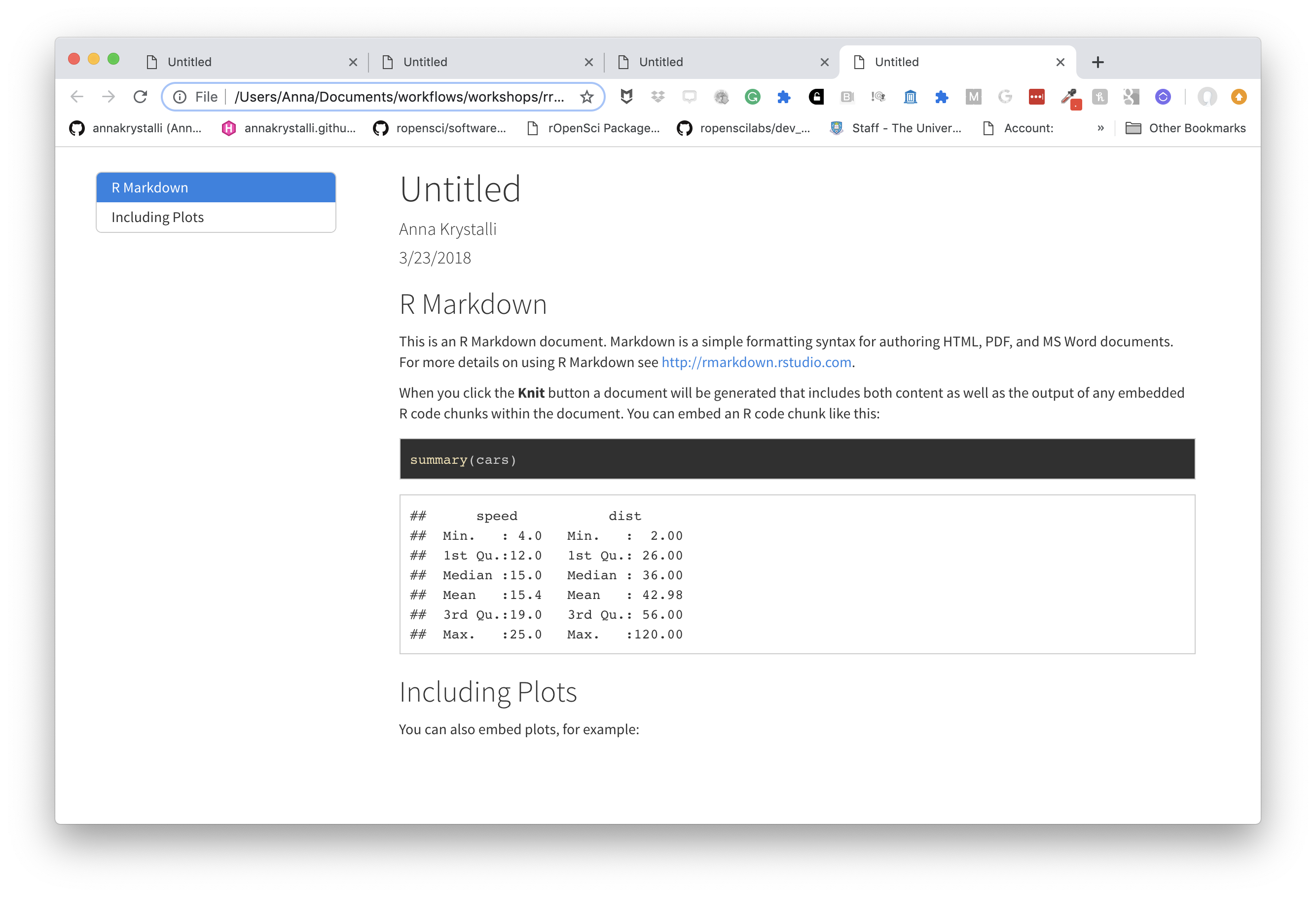
R Markdown supports dozens of static and dynamic output formats including HTML, PDF, MS Word, Beamer, HTML5 slides, Tufte-style handouts, books, dashboards, shiny applications, scientific articles, websites, and more. Dear community, Hopefully an interesting question: is it possible to create a fillable PDF form using R markdown? We can create all sorts of PDF files using markdown, but I never saw an interactive form containing text boxes, radio buttons or checkboxes. Thanks in advance for any hint, Adrian. R Markdown Reference Guide Learn more about R Markdown at rmarkdown.rstudio.com. Pdfdocument worddocument mddocument ioslidespresentation slidypresentation.
Another way to specify parameters for a report is to use the YAML field params, e.g.,
Note that you can include as many parameters in the params YAML field or the params argument of rmarkdown::render(). If both the YAML field and the argument are present, the parameter values in the argument will override the corresponding parameters in YAML. For example, when we call rmarkdown::render(..., params = list(state = 'Iowa', year = 2018) on the previous example that has the params field, params$state will become Iowa (instead of Nebraska) and params$year will become 2018 (instead of 2019) in the R Markdown document.
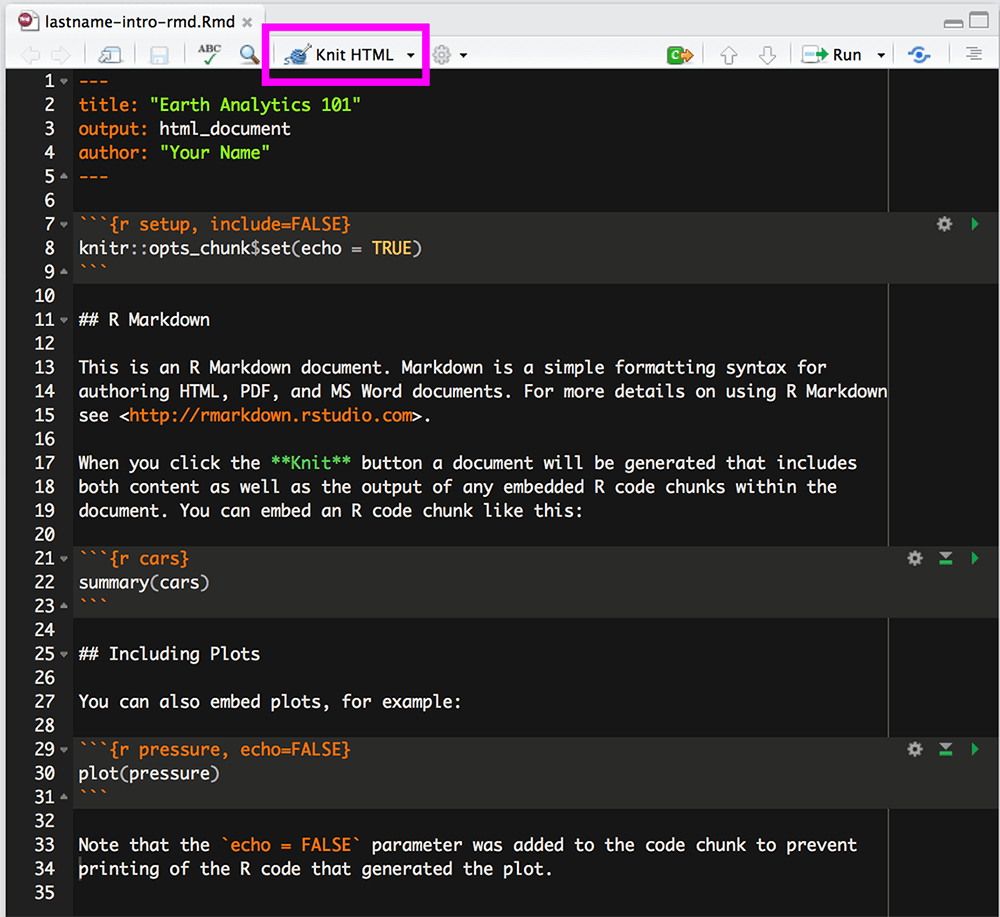
When rendering the same R Markdown document to a series of reports, you need to adjust the output_file argument of rmarkdown::render(), to make sure each report has its unique filename. Otherwise, you will accidentally override certain report files. For example, you can write a function to generate a report for each state and each year:
Then you can use nested for-loops to generate all reports:

R Markdown Pdf
At the end, you will get a series of report files like Alabama-2000.pdf, Alabama-2001.pdf, …, Wyoming-2019.pdf, and Wyoming-2020.pdf.
For parameterized reports, you can also input parameters interactively through a graphical user interface (GUI) created from Shiny. This requires you to provide a params field in YAML, and rmarkdown will automatically create the GUI using the appropriate input widgets for each parameter (e.g., a checkbox will be provided for a Boolean parameter).

To start the GUI, you can call rmarkdown::render() with params = 'ask' if you do not use RStudio:
If you use RStudio, you can click the menu Knit with Parameters behind the Knit button. Figure 17.1 shows an example GUI for parameters.

R Markdown Examples
FIGURE 17.1: Knit an R Markdown document with parameters that you can input from a GUI.
How To Use R Markdown
For more information on parameterized reports, you may read Chapter 15 of the R Markdown Definitive Guide(Xie, Allaire, and Grolemund 2018).